Suddenly, large blocks of opaque white ice dot the surface of the water far below. Beyond the propeller that is humbly affixed to this tiny airplane, the scenery of East Greenland begins to come into view.
Back at the lodge again, familiar faces file into the room. Matt, Helen, Tree, and Jukku all lean in for big hugs. We’re back at home in Kulusuk again.
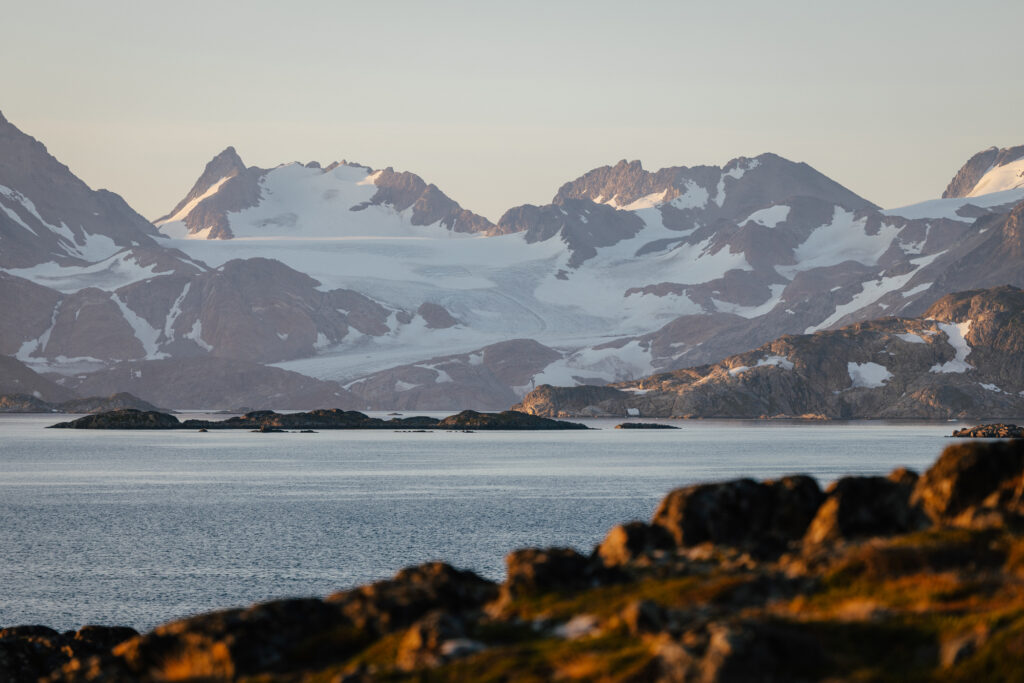
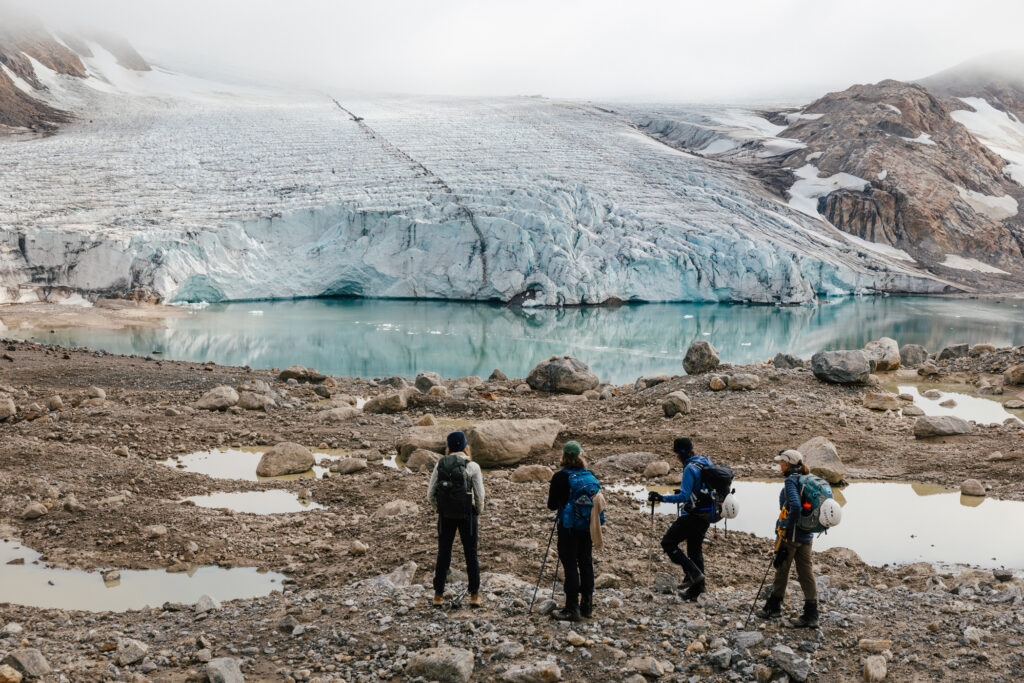
This is my third time here, and this is the reason why I like bringing Hinoki travelers back to the same places. There is something richer I can offer if I’m emotionally connected to a place. And it’s not just about the people, but also the land. Upon return, I see how it has evolved. I trace the familiar patterns on the horizon with my eyes as I look out toward Apusiaajik island. But when we reach the glacier, I can see that it has retreated, and my heart quickens a little.
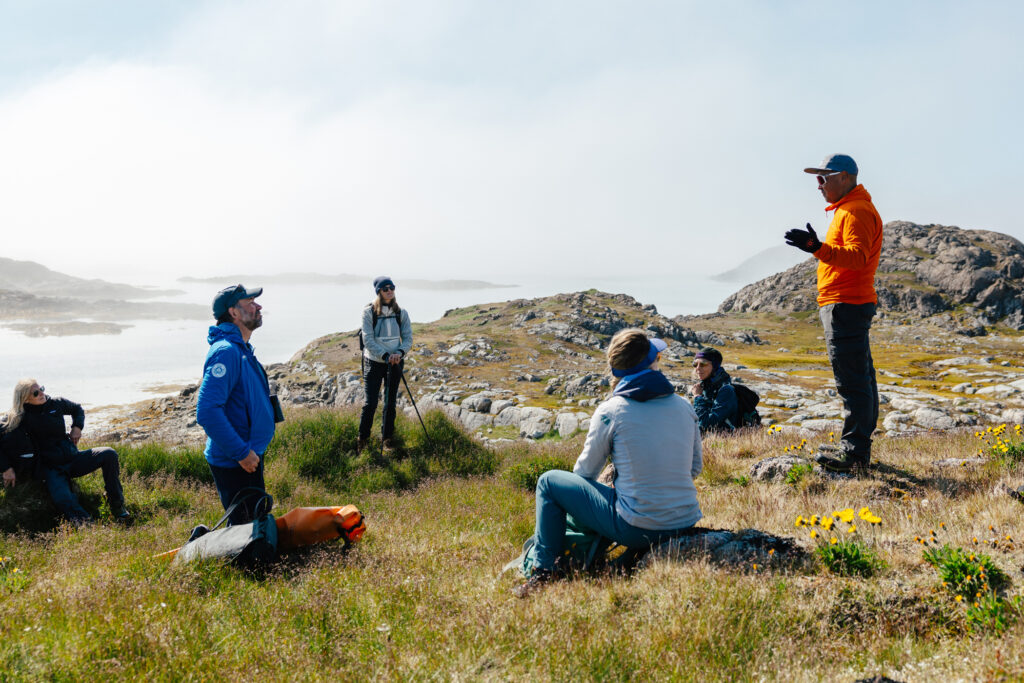
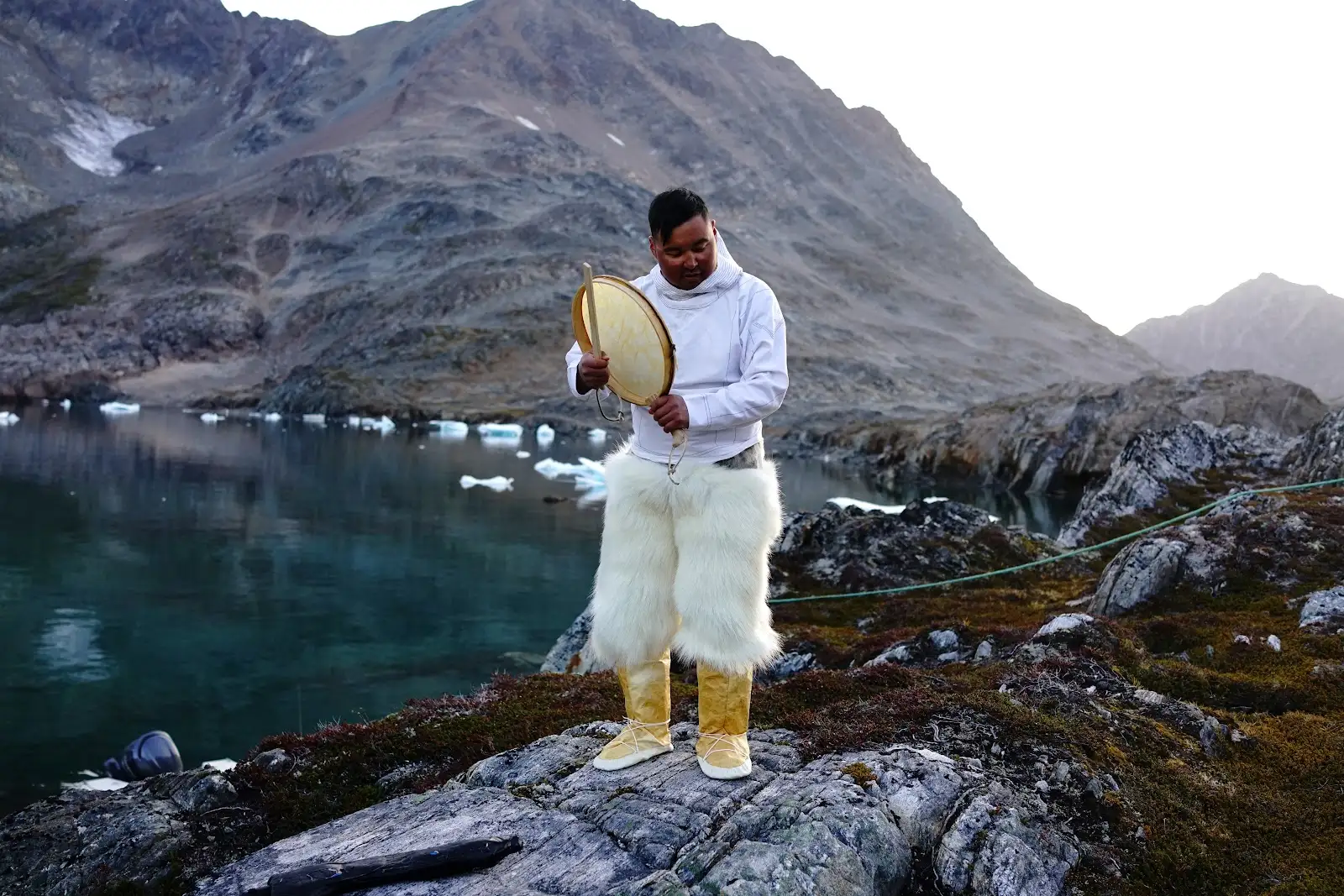
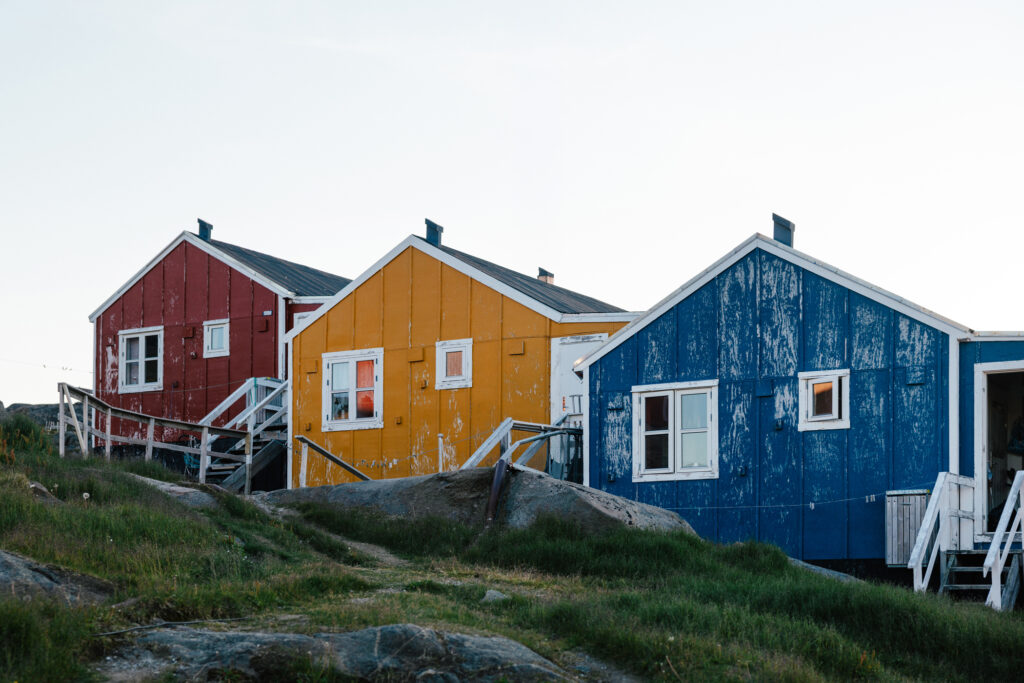
There are many things we considered when initially designing this trip on the theme of Interdependence. The most important one was the presence of a local story-teller. Someone who’s had an intimate relationship with the land & waterways since birth. Often, conversations about the Arctic become isolated around climate change and biodiversity. And there is still often a colonial explorer’s mindset in much of the media published about it. It seems that few people realize how culturally rich Greenland is. Having Jukku travel with us for the entire duration of the trip, in a place where few Greenlanders work as a guides, is an immense honor for us. Here, he’s telling us about the old winter houses we’re standing in, where his family lived generations ago.
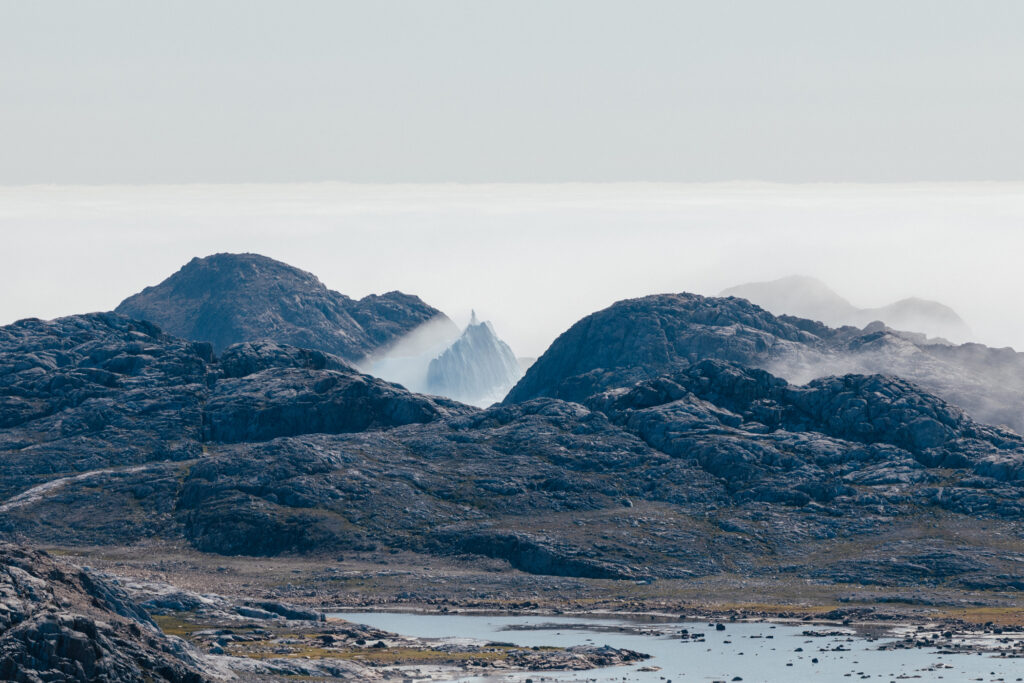
It’s not just humans who tell the stories here. All around us, water is speaking. There is a near constant sound of melted ice rushing down the sides of mountains, forging new waterfalls, rivers, and streams everyday. An iceberg crackling, and then releasing large slabs of its facade into the fjord with a splash. The sound of the tide waters rhythmically lapping against the shore, taking the seaweed just under its surface for a dance.
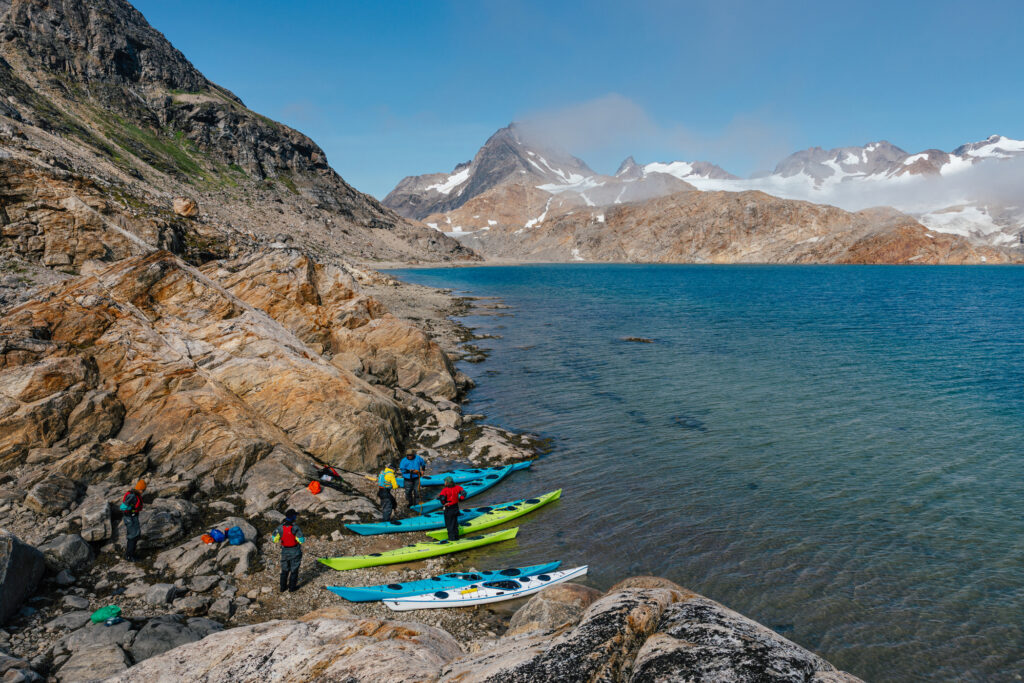
Every time, the elements here humble us. Upon arrival, I try to gain confirmation from our local team that we’ll be able to do all the things I was hoping we’d do. ‘We’ll see…’, they’d say frankly without apology. That’s just the way things have to be here. You are always at the mercy of the weather, the land, the water and the animals. I try to remember this, I remind our travelers of this. And because it’s inarguable, we suffer nothing and just go with the flow, with no anticipation of what the day will bring. I make a mental note to try to live like this again when I get home.
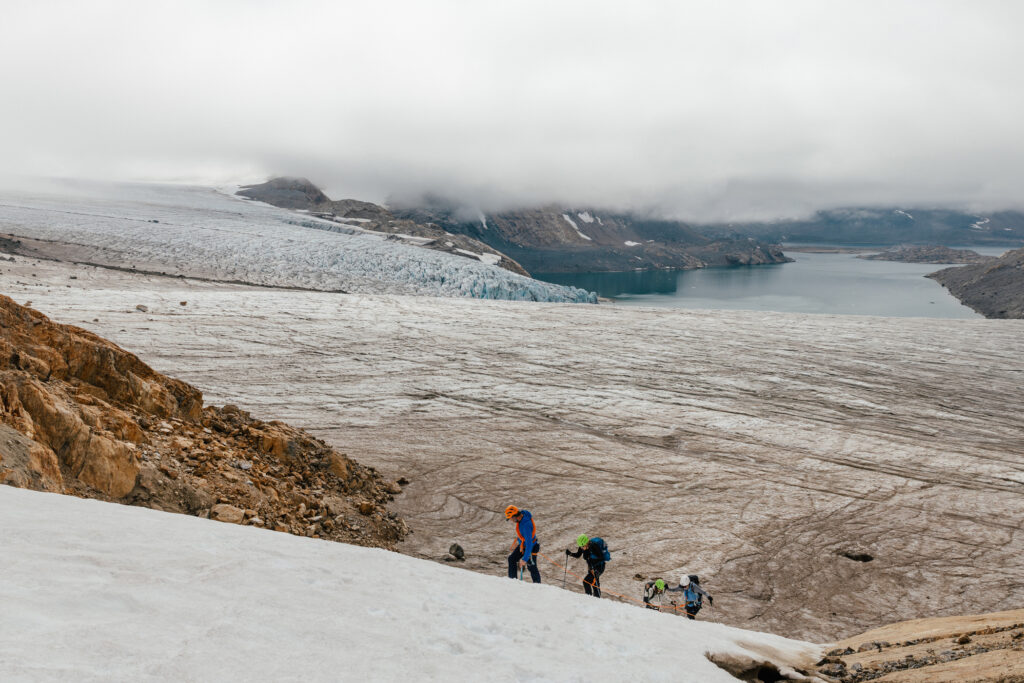
It’s impossible to visualize scale here. Vast open space plays tricks on the eye. What looked like a little sledding hill from the bottom was actually a pretty steep, slick ascent while climbing it. Now I understand why John (our guide) brought ropes, I thought. He tied us to each other and instructed to leave a healthy amount of space between us and to hold some tension on the rope. We had to climb up in harmony, or the whole arrangement doesn’t work. Interdependence.
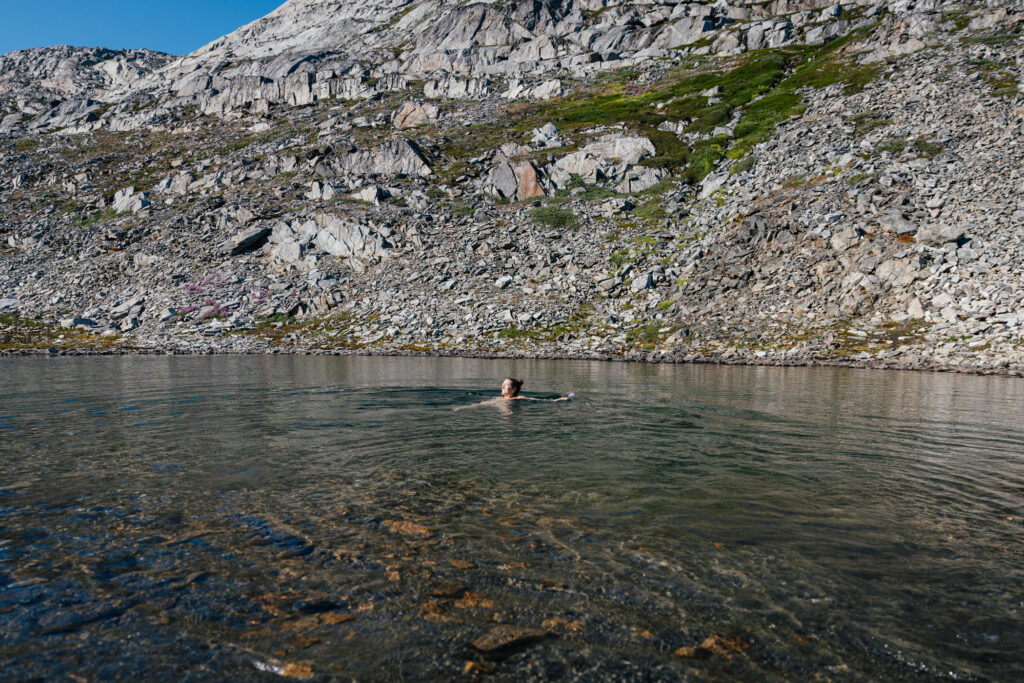
This year I traveled with another incredible group of people who arrived as strangers and left as family. Sounds so cliché, right? But time in the backcountry especially can quicken bonds. We reach closeness more easily with nothing to distract us from each other. We shared our laughs, our tears, our fears. We stripped everything off in broad daylight and went skinny dipping in an Arctic lake together.
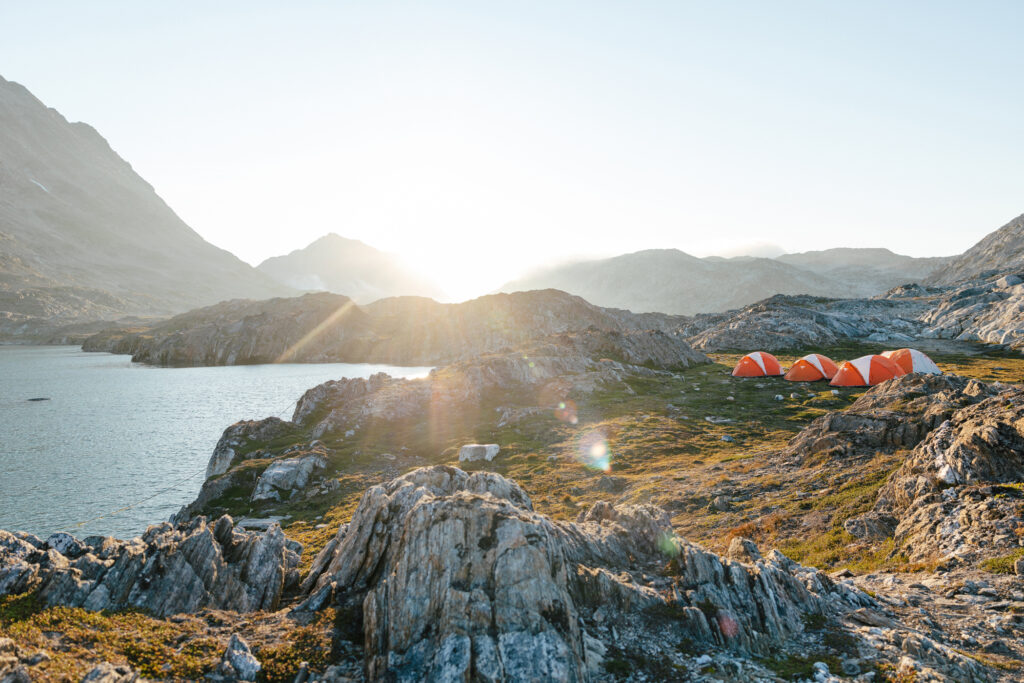
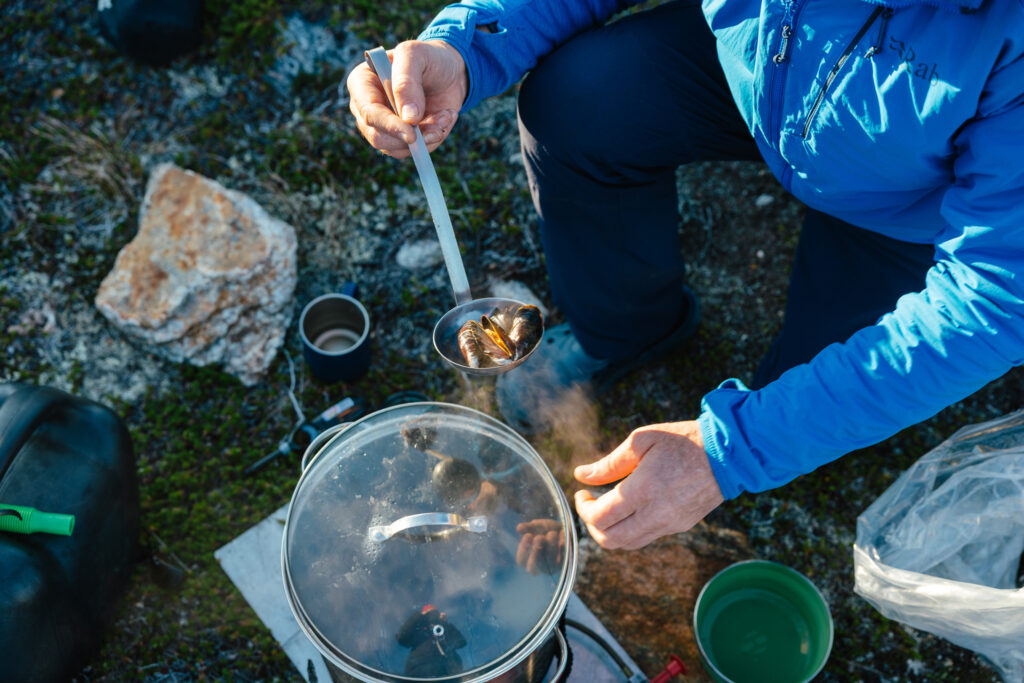
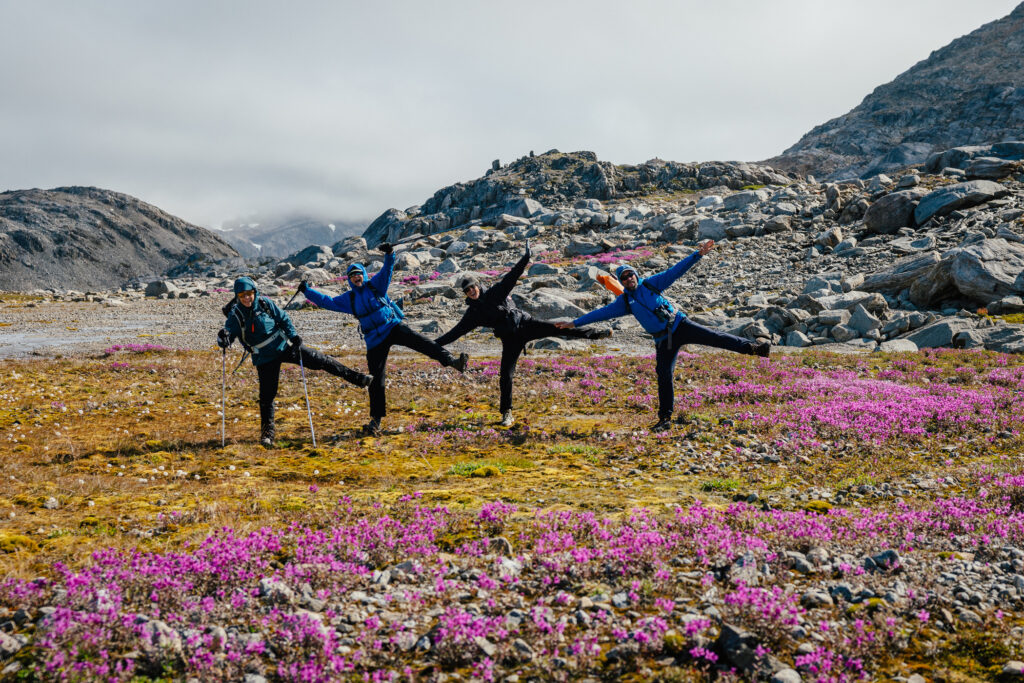
Interdependence was designed to teach us not just about the realities of climate change, but about how to become more adaptive in every aspect of our lives. So much of that stems from our ability to do life together, as families, as communities, as citizens. There’s a trend about transformational travel for the individual, but I believe that travel’s greatest potential is for how it can transform us as a collective.
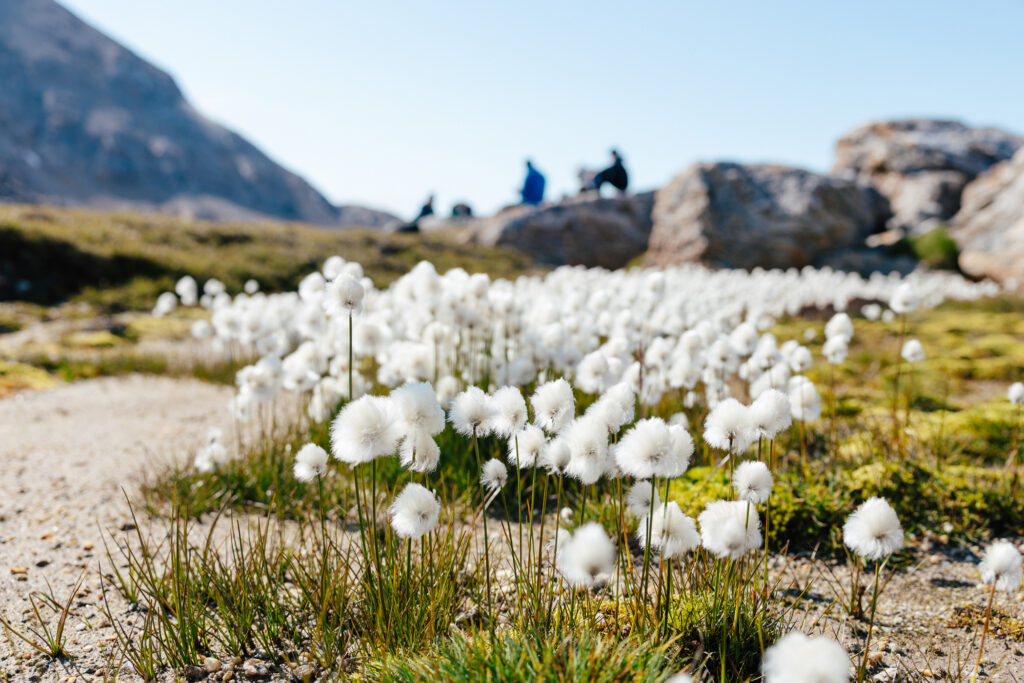
And in that spirit, to go even deeper and seek a meaningful relationship with the more-than-human world, too. What is the intelligence and grace contained within the Arctic wildflowers, who have learned how to thrive in the wildest of harsh conditions?
Because, you see, to come back to ourselves is to come back to the natural world. And it’s only when we have experienced true intimacy with the wild around us that we’ll be able to know the wild within us.
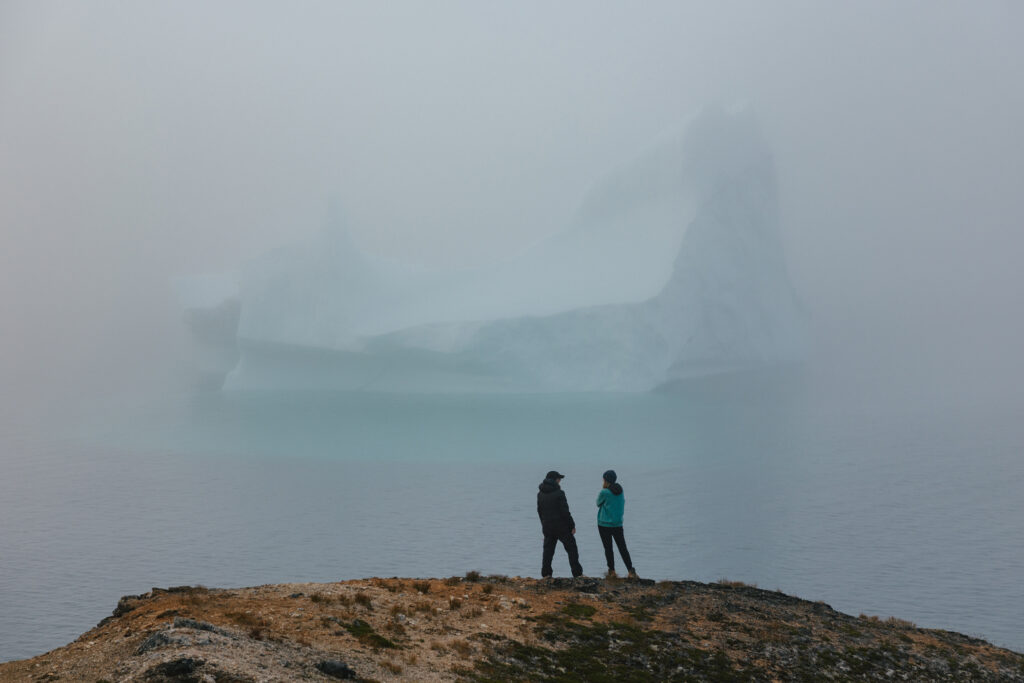
I leave Greenland every time with a profound feeling of awe. But this awe is not amusement, it’s humility. Going into the Arctic brings me closer to recognizing human fragility. And yet, as we talk with Jukku and other members of the community in Kulusuk, I’m also reminded about the human will to survive against all odds.
If you decide to come, come ready to listen. To move differently. To let Greenland change your sense of pace. We are going back in the summer of 2028. To learn more, send an email to info@hinokitravels.com.
All photos shared in this Trip Notes were shot by Bénédicte Lassalle, who joined us for this trip.